
How to be more interesting at networking
When we’re networking, we all want to engage and stand out. But what makes us memorable for the right reasons? Presentation coach Simon Raybould discusses the science of being interesting.
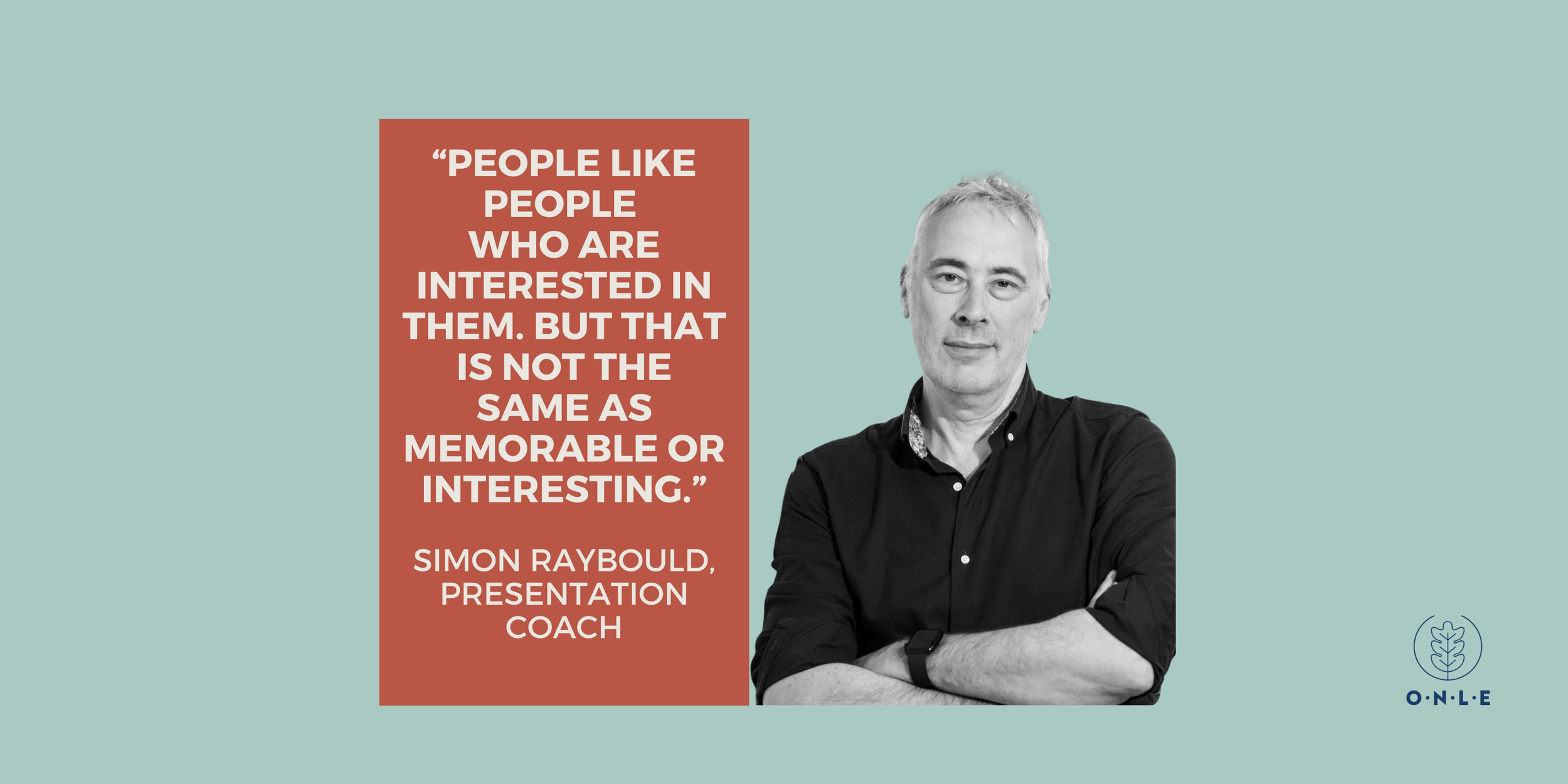
During ONLE Central, our monthly education and discussion session, presentation coach Simon Raybould challenged members to reconsider how they communicate when networking, exploring why some conversations stick in our memories while others are forgotten almost immediately.
His starting point was that there's an important difference between being interested in someone and being interesting to them. Most of us have learned to be good listeners, ask questions and show genuine curiosity about the people we meet. These are all valuable qualities, but Simon suggested they don't necessarily make us memorable.
“It doesn't matter how interesting you are in the moment. If they can't remember that interestingness afterwards, there was absolutely no point whatsoever.”
At the other extreme are people who seem determined to make every conversation about themselves. Simon calls this the Even More Interesting (EMI) response. You mention your holiday and they've been somewhere more exotic. You describe a business challenge and they've faced something much worse. Rather than building a connection, the conversation becomes a competition.
So what's the alternative? Simon offered some ideas to consider.
Could being interesting mean being a little unexpected?
Simon introduced the concept of being 'adjacent interesting'. Rather than simply agreeing with someone or responding with something completely unrelated, the idea is to contribute something slightly unexpected while maintaining a connection to what they're talking about.
“You say something which is just a bit different from what they were expecting. It's close enough for them to be able to respond to it.”
Imagine someone describing the challenges of recruiting their first employee. You could ask more questions about recruitment, or launch into a lengthy account of your own hiring experiences. But perhaps you have a story about the first time you delegated something important, or how your relationship with a colleague changed your business.
What makes a good story memorable?
Simon explained that storytelling is one of our oldest forms of communication, and research suggests stories can be considerably more memorable than simply presenting facts.
To demonstrate, he showed members a photograph taken by his wife. He explained how a keen photographer might describe the image in terms of camera equipment, lens settings, exposure and the technical decisions involved in capturing it.
But the audience was rather more interested in the tiger hiding in the picture.
Especially when Simon explained that he'd been getting out of their Jeep to answer a call of nature without noticing the animal nearby. His wife spotted the tiger and warned him to get back into the vehicle. But not, apparently, until she'd finished taking the photograph!
There’s a lesson here for anyone attending networking events. When we're talking about what we do, are we sharing the details that we care about, or the stories that might interest the person we’re talking to?
Are we giving people too much information?
Simon also challenged our instinct to explain everything about our businesses when meeting someone new.
We're passionate about what we do, how we do it and why our approach is different. So when we're given an opportunity to talk about our work, it's tempting to pack in as much information as possible. But Simon explained that our listeners have a limited capacity to absorb and remember information. Overload them with details, and we risk making the entire conversation forgettable.
“People trust you to tell them only what they need to know. They assume everything you're telling them is important, so they try to remember everything.”
In other words, the person you're speaking to expects you to curate the information you share. And if you don't, they will struggle to remember anything meaningful.
For anyone who's ever tried to squeeze an entire business proposition into a 60-second networking introduction, this is excellent food for thought. Could saying less actually help people remember more?
So next time you finish a networking conversation, ask yourself: what do you think the other person will remember about you? And what is the thing that will make them remember you versus the other 10 people they met this week? Was it a comprehensive explanation of your services, an interesting story, or that moment of empathy where you both understood what you have in common?"
What is ONLE Central?
This article is based on Simon Raybould's member spotlight at ONLE Central – one of the monthly all-member events included in our membership.
It's one of nine optional member events available alongside our regional networking groups, giving members from across the UK, Ireland and the United States more opportunities to meet, learn from and build relationships with each other. Not an ONLE member yet?
Visit one of our regional meetings for just £5 using the code ONLEHELLO.
Find a meeting that suits your schedule.