
Is ‘consistency’ the most unhelpful word in business networking?
“Consistency” is often held up as the networking magic ingredient: keep showing up and results will follow. But here’s the danger: if you misunderstand what consistency really means, you can attend dozens of events, meet hundreds of people — and end up with nothing. James West from ONLE Networking explains the right kind of networking consistency.
Here’s a quote that summarises what some people think about networking:
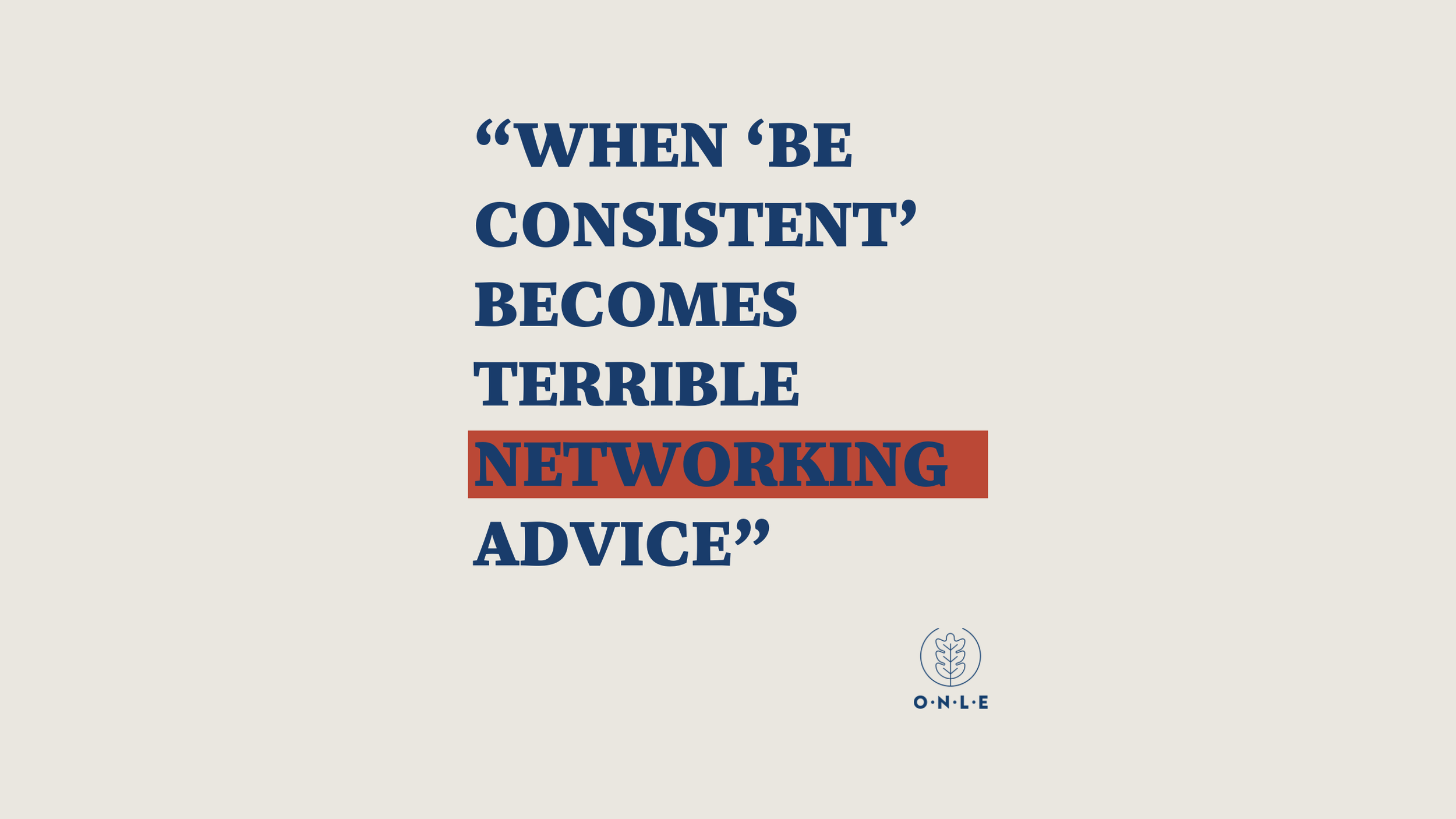
“If I just keep turning up at different networking events, eventually it’ll all click into place and I’ll get results.”
The bad news is: it won’t.
The good news? Once you understand the right kind of networking consistency, you can stop flitting between events looking for the network that works. Because here’s a truth most networking leaders won’t admit: people who consistently demonstrate the right behaviours get results — regardless of the networking group they belong to.
So what is the right kind of consistency? To answer that, we first need to understand the wrong kind of networking consistency.
Negative consistency: same mistakes, different day
Here’s what happens when someone takes “just keep turning up” too literally:
• Giving a vague introduction: “I help people thrive,” paired with a generic ask: “And I’m looking for anyone who knows anyone who wants my services.”
• Switching off when not speaking and being half-in the meeting, half into your work or another screen.
• Turning up without preparation — what are you bringing? What have you brought to the network this month or week?
• Carrying frustrations from past events into each new one (“Networking doesn’t work for me, but I suppose I’ll give this a go”).
• Jumping between multiple groups without ever building depth in relationships.
The latter — AKA the hit-and-hope networker — is perhaps the most common behaviour leading to frustration, and to people eventually giving up and declaring that the network (and eventually networking itself) is a dud.

“Here’s a truth most networking leaders won’t admit: people who consistently demonstrate the right behaviours get results — regardless of the networking group they belong to.”
James West, ONLE Networking
The harsh reality? Every networking group will disappoint if you repeat the wrong behaviours. But the good news is that with a few tweaks — starting with a mindset shift — you’ll quickly start to see change.
Positive consistency: credibility, familiarity, and intent
Positive consistency is what most people think they’re being told when they hear “be consistent.” It’s about showing up with purpose, being prepared, and giving people a clear sense of who you are, who you help, and how you can be useful. And most importantly, being interested enough in other people that you start to build the relationships that are the key to all networking.
Examples of positive consistency at networking:
- Preparing what you’ll share (your intro, your ask, anything new you’re bringing to the network) so it’s specific, easy to understand, and doesn’t take too much airtime. This doesn’t mean spending hours rewriting a script every time — but it does mean spending some time outside the meetings preparing, so when you speak, it confidently carries weight.
- Following up after every meeting by connecting on LinkedIn, arranging calls, and actioning any help you’ve promised.
- Listening as much as you talk, and evolving how you describe your business based on what you learn.
- Going back to the same network to build depth in relationships. It’s depth that’s crucial to networking — not just farming more connections.
- Caring about people and how you can help them. This simple one is the most powerful. Without it, you’re just another person asking for help while appearing to be unwilling to give help.
Repeating these behaviours builds familiarity as people start to recognise you, remember your message, and connect your name to what you do. It also builds credibility — because turning up regularly and doing what you say you will are powerful trust signals that others notice, even if they never become a customer.
Want to learn more about the consistent behaviours I used to get all my sales from networking? Take a look at the How to Network Online webinar and resources to learn the basics (and more), and make sure your networking consistency turns into consistent results: